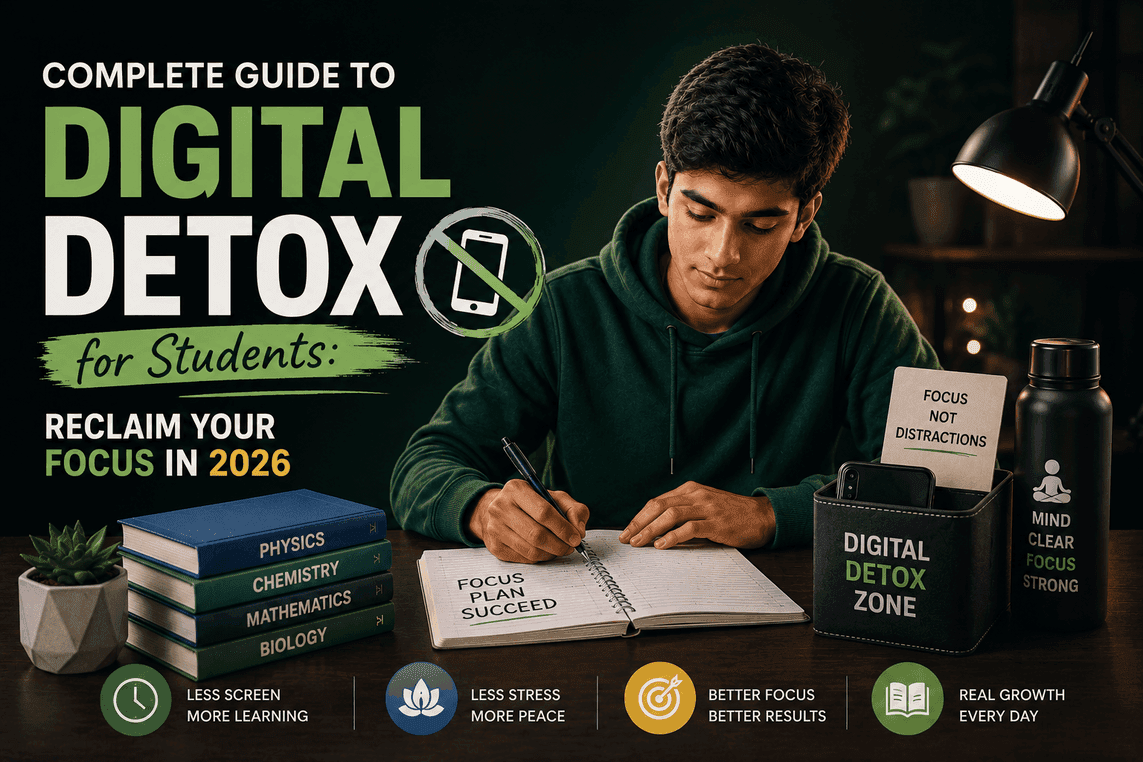
Complete Guide to
Digital Detox for Students
Discover proven strategies to reduce screen time, overcome social media addiction, and transform your study habits. Reclaim your focus and mental well-being.
Key takeaways
- Excessive screen time negatively impacts sleep quality and academic focus.
- A structured digital detox plan helps students regain control over their attention.
- Mindful technology use leads to better concentration and reduced anxiety.
- Free tools like Forest and Freedom can help block distractions during study sessions.
- Starting with small, achievable digital detox goals leads to lasting habit change.
🎯 Start Your Digital Detox Journey Today
Take the first step towards better focus and academic performance with our proven strategies.
Table of Contents
The Digital Detox Crisis: Why Students Need Help Now
🎥 Watch: Digital Detox Guide for Students
📹 Visual guide to implementing digital detox strategies in your daily student life.
Studies from Harvard Health and Psychology Today show that reducing screen time can significantly improve sleep quality, focus, and overall well-being for students.
📊 Digital Usage Trends:
- • Students worldwide report challenges with managing screen time
- • Excessive social media use can negatively impact study focus
- • Digital detox practices help improve concentration and sleep quality
- • Mindful technology use leads to better academic outcomes
The digital revolution has transformed education, but it's also created an unprecedented crisis of distraction, addiction, and mental health challenges among students worldwide. From social media notifications to endless entertainment streams, the constant digital stimulation is rewiring young brains and destroying their ability to focus on what truly matters – learning and personal growth.
This comprehensive guide will help you understand the science behind digital addiction, recognize the warning signs, and implement practical strategies to reclaim your focus, improve your academic performance, and build a healthier relationship with technology.
Understanding Digital Addiction: The Science Behind Screen Time
The Dopamine Loop
Social media and apps are designed to hijack your brain's reward system. Each notification, like, or comment triggers a dopamine release, creating an addictive cycle that's hard to break.
- Variable reward schedules keep you hooked
- Infinite scroll prevents natural stopping points
- Social validation triggers addiction pathways
Attention Fragmentation
Constant notifications and multitasking fragment your attention span, making it difficult to focus on deep learning and complex problem-solving.
- Constant notifications shorten attention spans
- Context switching reduces overall productivity
- Deep work becomes nearly impossible
🧠 How Digital Addiction Affects Learning:
Signs You Need a Digital Detox Immediately
Academic Warning Signs
- Grades declining despite studying
- Can't focus during lectures
- Procrastination through social media
- Missing deadlines due to distraction
- Poor quality of assignments
Behavioral Warning Signs
- Checking phone first thing upon waking
- Anxiety when phone battery dies
- Phantom vibration sensations
- Choosing social media over sleep
- Irritability when offline
Physical Warning Signs
- Eye strain and headaches
- Poor sleep quality
- Neck and back pain
- Weight gain from sedentary behavior
- Increased stress levels
Social Warning Signs
- Preferring online over in-person interaction
- FOMO (Fear of Missing Out)
- Comparing yourself to others online
- Neglecting real relationships
- Social anxiety in face-to-face situations
The 30-Day Digital Detox Challenge
🎯 Your Step-by-Step Recovery Plan
Week 1: Awareness & Assessment
Track your digital habits and identify problem areas
Week 2: Environment Setup
Create a distraction-free study environment
Week 3: Habit Replacement
Replace digital habits with healthy alternatives
Week 4: Integration & Balance
Develop sustainable digital habits
Essential Digital Detox Tools & Apps
Forest
Focus Timer
Freedom
Website/App Blocker
Moment
Screen Time Tracker
SyncStudy
YouTube Learning
Space
Phone Usage Manager
StayFree
Screen Time Monitor
Study Techniques Without Digital Distractions
Analog Study Methods
- 1
Physical Note-Taking
Handwriting notes improves retention compared to typing
- 2
Mind Mapping
Visual connections enhance understanding and memory
- 3
Flashcards
Physical cards for active recall and spaced repetition
Focus Techniques
- 1
Pomodoro Technique
25-minute focused sessions with 5-minute breaks
- 2
Deep Work Sessions
2-4 hour uninterrupted blocks for complex tasks
- 3
Time Blocking
Schedule specific tasks in dedicated time slots
Real Student Success Stories
“The digital detox strategies transformed my academic life. I went from constant distraction during lectures to active participation and better note-taking. My grades improved noticeably, and I rediscovered the joy of learning.”
“I was constantly on my phone and falling behind in my courses. After implementing these strategies, I not only caught up but excelled. The key was replacing digital habits with real-world activities and focused study sessions.”
Your Personal Digital Detox Action Plan
🚀 Start Your Transformation Today
Immediate Actions (Today)
- 1Delete your most time-wasting app
- 2Set up phone-free study zones
- 3Install a screen time tracker
- 4Share your goals with a friend
This Week
- 1Try one day without social media
- 2Create device-free meal times
- 3Start a morning routine without phone
- 4Practice mindfulness for 10 minutes daily
Frequently Asked Questions
What is a digital detox for students?
A digital detox is a designated period when a student refrains from using digital devices such as smartphones, tablets, computers, and social media platforms. It helps reduce stress, prevent screen fatigue, and reclaim study focus.
How long should a student's digital detox last?
It can range from a daily phone-free window (like 2 hours before bed) to a structured 30-day program. Starting with small, manageable targets — like turning off notifications during study blocks — is highly effective for building long-term balance.
Can digital tools actually help with a digital detox?
Yes. Focus-blocking apps like Forest or Freedom, and learning organizers like SyncStudy (which hosts YouTube lectures in a distraction-free player), allow you to use technology productively while cutting off non-essential digital triggers.
Related Student Guides
Best Productivity Apps for Indian Students
Free and paid productivity tools for time management and focus.
How to Finish a YouTube Playlist Faster
Proven strategies to complete playlists 3x faster.
10 Best Apps for Students in India
Definitive ranked list of free and paid study apps.